Origin country
Croatia
Origin region
Zagreb County
Quantity available
500 kg
Courier delivery
Yes
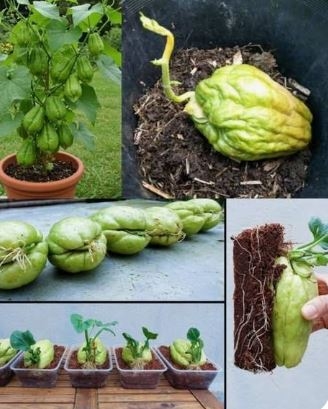
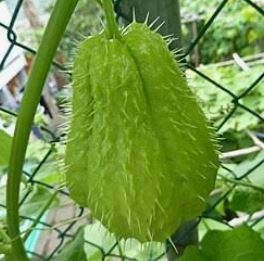
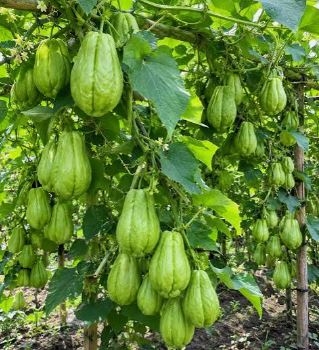
Chayote (Mexican squash) is a plant from the Cucurbitaceae family, species *Sechium edule*, traditionally cultivated in Central and South America between 800 and 1000 meters above sea level. There are two types of chayote: spiny and spineless, while varieties are defined by color and size. The plant grows like a squash, climbing as a vine up to 12 meters high. It is primarily used for human consumption, though most people are familiar only with the fruit—both the leaves and roots are edible.
Nutritional values per 100 g of fruit:
Calories: 25 kcal
Dietary fiber: 2.2 g
Carbohydrates: 5.1 g
Proteins: 1.1 g
Fats: 0.4 mg
Vitamin C: 0.3 mg
Sodium: 0.3 mg
Potassium: 165 mg
Calcium: 22.4 mg
The tubers of the plant are eaten like potatoes and other root vegetables and can also be used as animal feed. Chayote fruit is consumed raw or cooked. When cooked, it is typically treated like zucchini—usually boiled lightly to retain its fresh taste, but it can also be fried or roasted. Raw chayote can be added to salads or salsas and is often marinated in lemon or lime juice. Due to its softness, the fruit is used in baby food, juices, sauces, and pasta. Whether raw or cooked, chayote is a good source of amino acids and vitamin C and is very low in calories.
Medicinally, chayote leaves are used in tea to break down kidney stones and treat atherosclerosis and hypertension, while the leaves and fruit have diuretic, cardiovascular, and anti-inflammatory properties.
CHAYOTE - MEKSIČKI KRASTAVAC
Meksički krastavac je biljka iz porodice Cucurbitaceae, vrsta Sechium edule i tradicionalno se uzgaja u Srednjoj i Južnoj Americi ,između 800 i 1000 m nadmorske visine. Postoje dvije vrste chayota, s bodljama i bez njih, dok različite sorte definiraju boja i veličina. Biljka raste poput krastavca puzeći kao loza na visinu do 12 m. Koristi se uglavnom za ljudsku prehranu. Iako je većina ljudi upoznata samo s plodom jestivi su listovi i korijen.
Nutritivne vrijednosti za 100 g ploda:
Kalorije 25 cal
Dijetalna vlakna 2.2 g
Ugljikohidrati 5.1 g
Proteini 1.1 g
Masti 0.4 mg
Vitamin C 0.3 mg
Natrij 0.3 mg
Kalij 165 mg
Kalcij 22.4 mg
Gomolji biljke se jedu kao i krumpir i ostalo korjenasto povrće,a može se koristiti i kao stočna hrana.Chayote plod se koristi sirov ili kuhan. Kada je kuhan, s chayotom se obično postupa kao i s tikvicama, općenito se lagano kuha da zadrži svjež okus,ali može se i pržiti i peći.. Sirova chayote može se dodati salatama ili salsama, a često je mariniran s limunom ili limeta sokom . Zbog svoje mekoće plod se koristi za dječju hranu, sokove, umake i tjestenine. Bilo sirov ili kuhan, chayote je dobar izvor aminokiselina i vitamina C te ima vrlo malo kalorija. Ljekovita korist od chayota lišća je čaj od lišća za razbijanje bubrežnih kamenca i za liječenje ateroskleroze i hipertenzije ,dok lišće i plod imaju diuretska,kardiovaskularna i protuupalna svojstva.

Krapinska 12
Bistra
10298
Croatia
Netfoodmarket is a specialized portal for producers and buyers in Croatia, Slovenia, Germany, Austria and European Union. Our clients can place and search offer and demand ads. After registering you can place one free ad, and if you create a company and pay membership, you will have PREMIUM benefits during one year. For the price of 60€, you will get your profile that you can edit so you can introduce yourself as best as you can because this portal is created for you. You can determine product prices and available quantities, see the statistics of clicks on your ads, use our practical delivery service by affordable prices, compare your prices with competition, place your recipes. Producers can browse demand ads, memebers can use our banner advertising at a special price ... Everything in one place! All Netfoodmarket members can use our customer service as their joined marketing team.
* Fields labeled with a star are mandatory
** At least one contact number is mandatory, phone or cell phone
* Password must contain at least 6 signs.